Dr. Meredith didn’t want to go on the medical mission trip to Costa Rica. Even though it was a friend who invited her, the thought of leaving a mountain of work behind—when she was barely keeping her head above water—was unthinkable.
What she really wanted was a permanent split from the endless administrative work that had become her job. Trained in internal medicine, Dr. Meredith was running a new residency program and maintaining what clinical practice work her schedule allowed. But even when she could be present with patients and even though she cared about each one, a disconnection crept in with every last ounce of emotional energy she gave out. Over it all hung a sense that the system prioritized efficiency over presence.
Every day, she wondered, “Why am I doing this?”
“I found myself questioning whether the way I was practicing medicine was something I could continue long-term without burning out or losing myself in the process,” she said.
THE ENCOURAGEMENT THAT WAS NEEDED
Still, the offer to join the medical mission stood.
Every year, the First Presbyterian Church based in Michigan sends people from all over the country to San Jose, Costa Rica, to serve in the La Carpio community, which is an impoverished camp built alongside the main garbage dump. Over 40,000 Nicaraguans live there. Each team volunteers by providing medical and dental care, a pharmacy, eyeglasses, physical therapy, and human-to-human connection with community members in La Carpio.
Having never been on a medical mission before, Dr. Meredith was close to saying, “No, thank you.” But then her friend shared that the church’s regular trip to Costa Rica had renewed her love of medicine.
“Think about it,” she urged.
It was the encouragement Dr. Meredith needed.
“It wasn’t an easy or impulsive decision, but it felt necessary. I didn’t go expecting answers—I went hoping for perspective.”
.jpg)
AN ASTONISHING REALIZATION FROM AN AMAZING PATIENT
Once in Costa Rica, the team offered all kinds of care in the nine days they served, especially medical care.
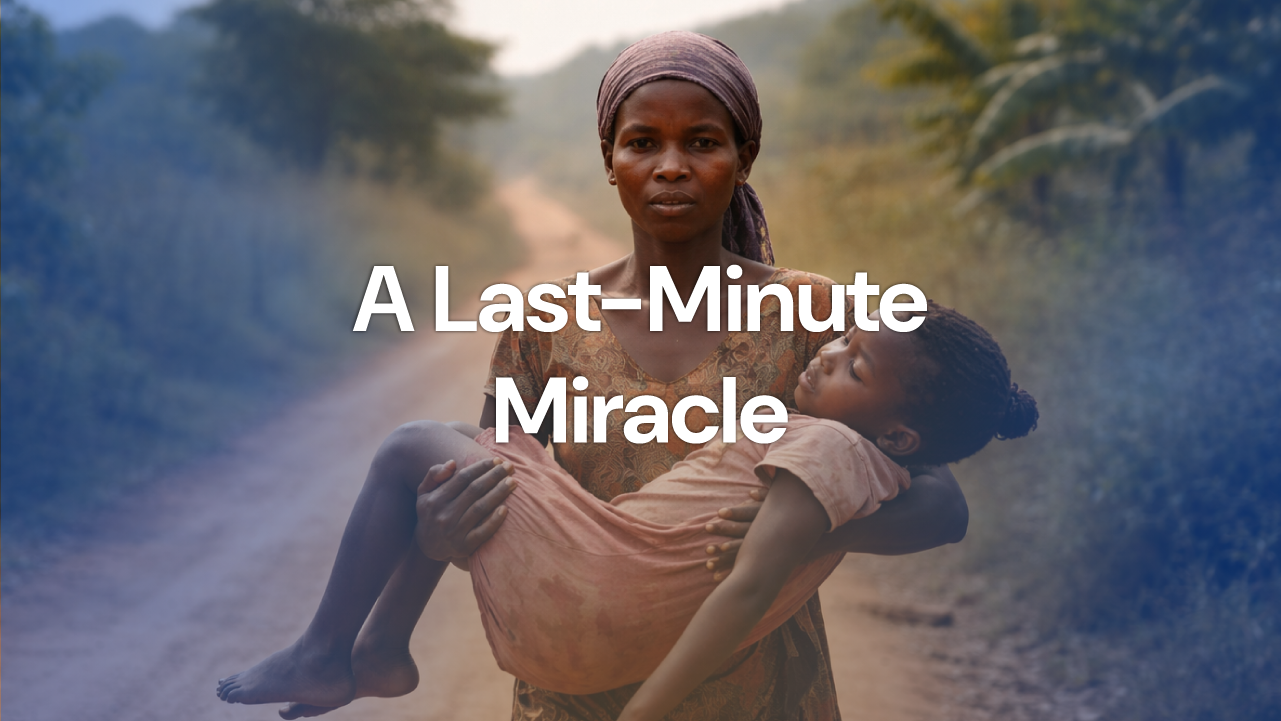
One day, the clinic nurse brought a woman to Dr. Meredith’s station. She introduced the woman as famous within the community.
“After hearing her story,” Dr. Meredith said, “I thought ‘courageous’ was a far better word.”
This young woman had fled Venezuela with her three children—one of which was an infant—and traveled by foot to the United States border. When she was turned away, she turned back south, retracing her steps. But going home was not an option. She would settle somewhere else. She walked the length of Mexico once more. But she did not stop in Guatemala. Nor Honduras. Nor Nicaragua.
She and her children stopped walking in Costa Rica, and now lived in the community where Dr. Meredith and the team now served.
For perspective, she had walked through eight countries at this point (some twice), and was only two countries away from where she had started. As the crow flies, Venezuela to the closest part of the US/Mexican border is 2,400 miles. The walk back would have been another 1,900 miles, estimated. Even Google Maps can’s calculate directions from Venezuela to the US/Mexican border, nor to Mexico in general.
“Her journey was astonishing on its own, but after learning about the dangers and threats faced by women and children in those circumstances, I was truly humbled.”
“I don’t know all the details of her journey—but her reaction when the clinic nurse introduced her to me and shared her story let me know that I could not even begin to know what she and her children endured.”
The encounter changed Dr. Meredith. Suddenly, her own problems felt so insignificant in comparison. “In that moment, I was reminded that medicine—at its core—is not about fixing everything. It is about witnessing, accompanying, and alleviating suffering where possible.”
This woman’s story was a reminder that being present for another human is inherently valuable, even when a better outcome is not guaranteed.
“That encounter reconnected me with the why behind medicine. I left remembering that the work still matters, and that how I show up within it matters.”
.JPG)
THE REALIZATION CONTINUES
The vision she returned home was now written on her heart. “I had a deeper sense of purpose and knew I needed to be back at the bedside with patients and their families.”
But even though she’d resolved in that encounter that she was going to stay in medical field, returning to ordinary life was challenging.
Like so many returning home after a life-changing mission trip, life held many frustrations with “first-world problems” and she couldn’t stop thinking of her patients in Costa Rica.
“When I felt frustration rising, I’d think back to Costa Rica—to the patients, the team, and that encounter—and it helped me re-calibrate.”
Months later, Dr. Meredith continues to carry the trip in her day-to-day life. And her patients and coworkers benefit for it. “The trip did not remove the hard parts of medicine, but it reminded me that my work still has a place in my life.”
Have a story of hope and healing? Send it to us here!